
CONTEXT
1st place out of 40, UC Berkeley SCET Entrepreneurship Startup Program
As part of my SCET Certificate of Entrepreneurship and Technology courses, I participated in the Fall 2025 Cohort of the Entrepreneurship Startup Program.
This program is composed of UC Berkeley students, global participants, and working professionals wishing to learn entrepreneurship and innovation skills and gain experience with building new ventures with interdisciplinary teams from around the world.
The competition involves developing a startup pitch from 0→1 and then presenting to a panel of investors.
With this project, we earned 1st place in the Fall 2025 round.
MY CONTRIBUTIONS
→ Led market and competitor research
→ Built mobile app prototype
→ Created physical device prototype
→ Created pitch deck design and storytelling
The Solution
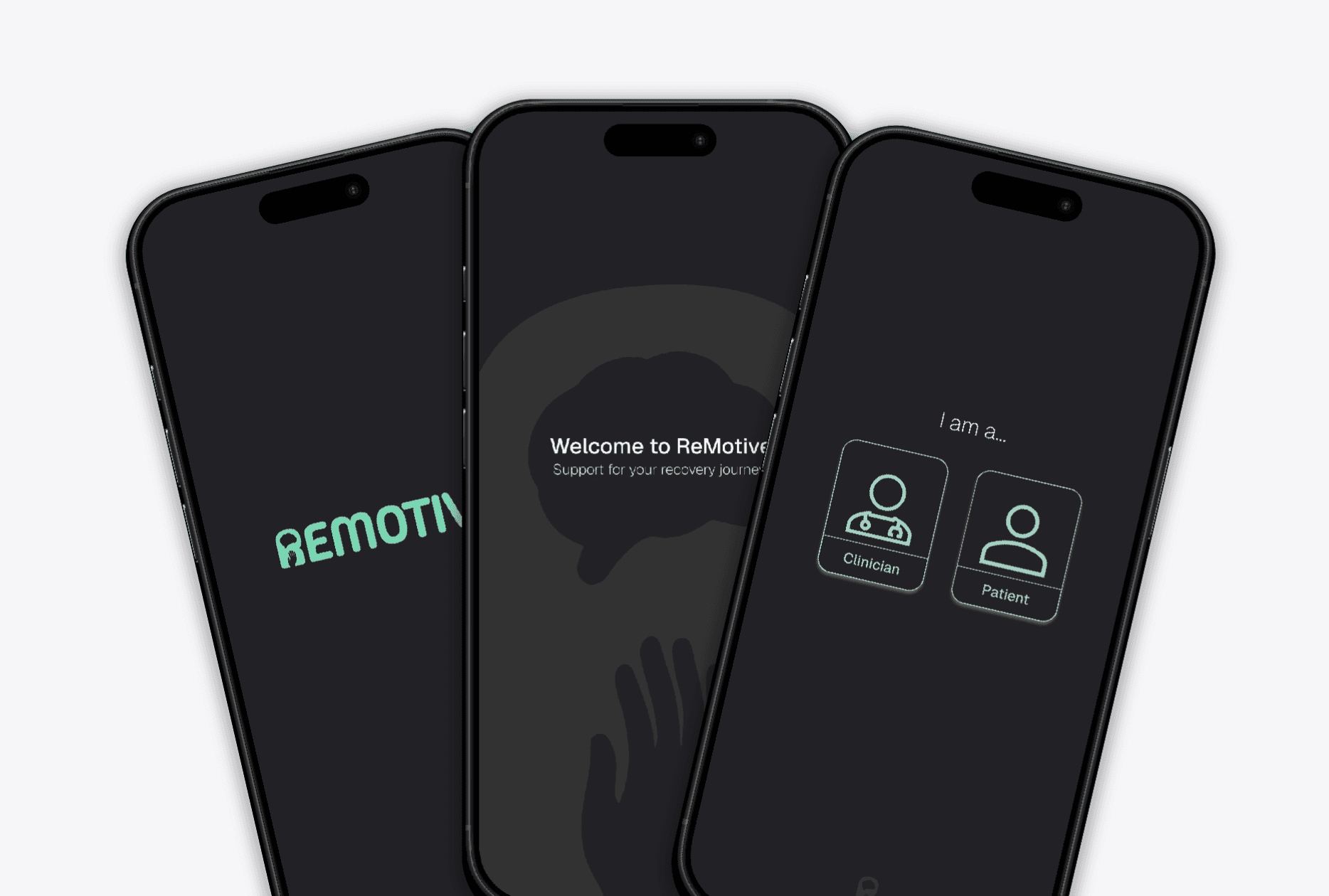
FINAL DESIGNS
A wearable device + dual-sided mobile app = seamless patient-provider communication
After 3D modeling a quick prototype for the wearable, I focused on refining the app that it pairs with.

Key Decisions
DEEP DIVE #1
Creating a patient-facing platform vs. catering to health providers
Our initial concept was a patient-facing app featuring gamified exercises and rewards, sold directly to patients and caregivers.
We questioned if we could do better and meet the patient where they were in their recovery journey, honing in on specific pain points.

To create an all-encompassing solution, we had to address pain points across all different stakeholders.

So, I reframed the product as a dual-sided platform: a patient experience and a clinician dashboard.
A patient-only app only touches one of the four problems.
Research into the rehab journey showed clinicians had no objective data between visits and were drowning in administrative burdens.
Designing for patients and clinicians means we address all four pain points simultaneously.
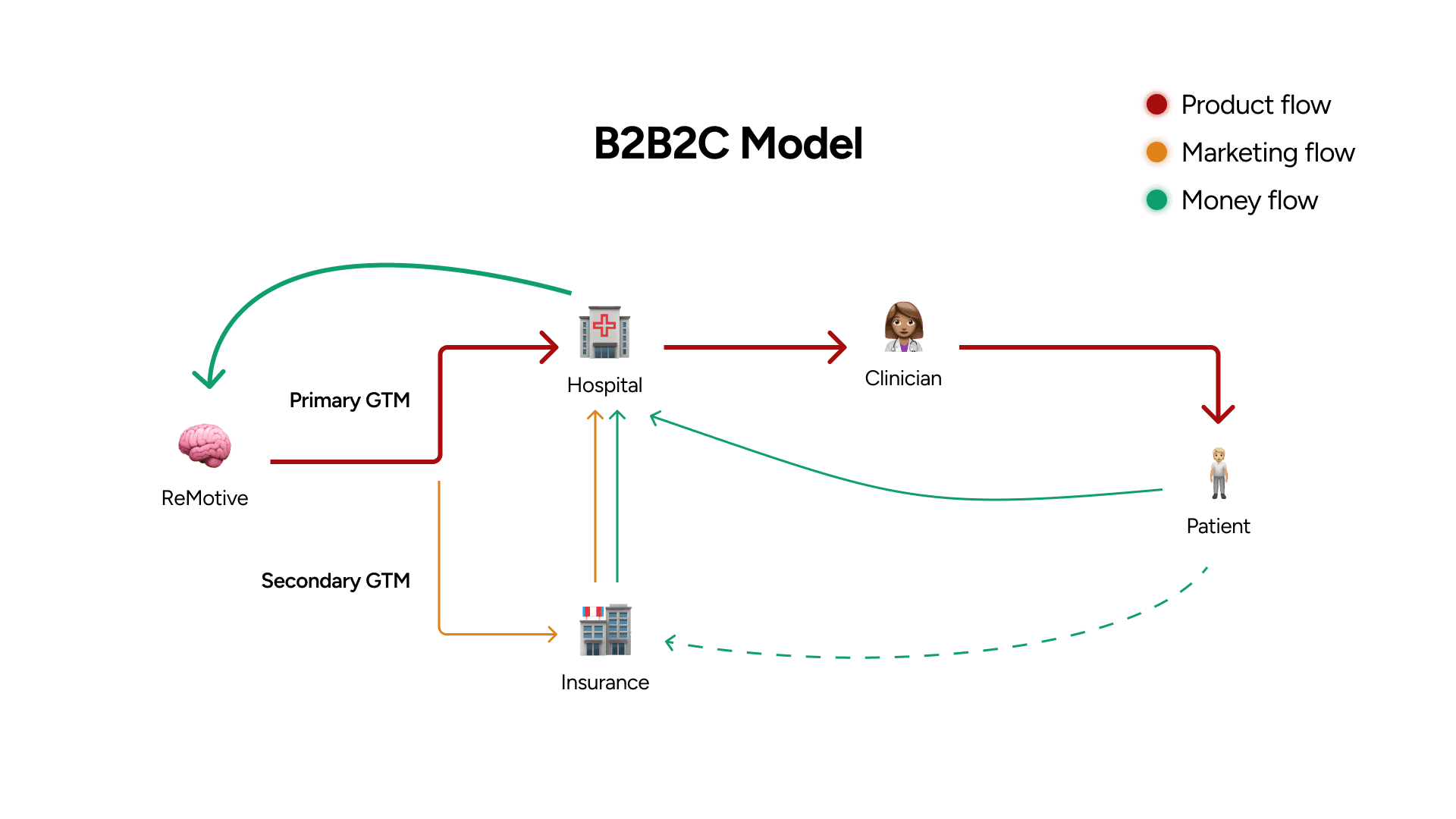
We reflected this focus in our shift to a B2B2C model, which made care institutions, not the patient, the buyer.
How we fit into the rehabilitative care space:
DEEP DIVE #2
How can we present dense information to different demographics?
The clinician needs dense, objective, workflow-ready data. While the patient needs an accessible, encouraging, and low-friction experience.
How do we create an experience that serves both without compromising the other?
What do clinicians need?

The Caseload screen
Highlights key insights
Using up-to-date patient data
Built for quick scanning
Allows for informed clinical decisions
Intelligently grouped data
Provides actionable insights at-a-glance
Retains raw data for clinician
For further manual analysis
Clinicians need…
Objective legibility for scanability
Workflow fit for seamless integration
Our dashboard features…
Automatically synthesized data
Actionable clinical notes
What do patients and caregivers need?

The Recovery Journey screen
Simple pathway visualization
Tracks therapy progression
Guided exercise demonstrations
Includes in-depth hand movement visualizations
Precise tracking and feedback
IMU sensors capture micro movements to ensure proper activity
Patients need…
Structure and encouragement to avoid recovery plateaus
Our dashboard features…
Adherence strategies that align with behavioral patterns
Outcome
1st place in the SCET startup competition!
Investors and UCB mentors validated that we have a credible, defensible product.
We designed a product story end to end in a one-week bootcamp: two distinct app interfaces (clinician + patient), a physical wearable concept, and the full pitch narrative.
The design and positioning supported a validated commercial model—a $3.8M projected Year-5 revenue case and a $1.6M raise ask—grounded in TAM/SAM sizing and RTM reimbursement research.
Reflection
Being resilient and pivoting effectively
Each time an idea didn’t work, further research pointed us toward a stronger reframe.
Next step: user testing!
Given more time, I would usability test the patient-facing gamification and accessibility choices. Feedback from real patients and caregivers would help us continue to improve our product.


